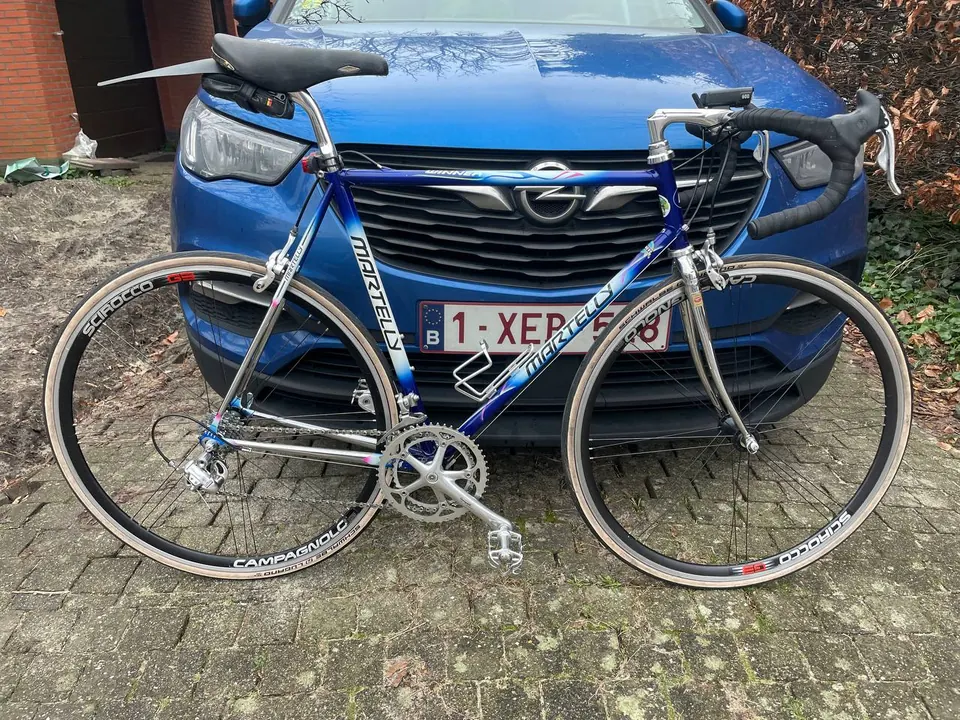
I treat complete bicycle service as precision work, not guesswork or automatic parts replacement. A comprehensive inspection and adjustment that restores quiet, accurate, and safe operation across the whole bicycle. I inspect the bicycle first, explain what genuinely needs attention now and what can wait, then complete the agreed work with professional tools and correct torque values.
Typical time1 working day–3 working daysHow I carry out the work
Labour for complete bicycle service is normally €70–€160 per job, with a typical workshop time of 1 working day–3 working days. The lower end applies to accessible, compatible components in serviceable condition; the upper end reflects high-level equipment, internal routing, corrosion, seized hardware, E-bike weight, or additional adjustment time. Replacement parts are not included. I inspect first and confirm any change before continuing.
Signs it needs attention
The baseline service is designed to solve the stated problem thoroughly, not simply make a quick adjustment that hides it. A comprehensive inspection and adjustment that restores quiet, accurate, and safe operation across the whole bicycle. I work through the related interfaces, because the visible symptom can be produced by wear or misalignment elsewhere. Every included step below is completed when it applies to the installed system and can be performed safely without replacing a failed component.
Several small noises
No service this season
The bicycle feels generally heavy
What is included
Documented intake, rider complaint review, and available service-history check
Visible frame and fork inspection for damage, play, abrasion, and unsafe interfaces
Controlled bicycle wash and deep drivetrain degreasing without flooding bearings
Chain measurement and inspection of cassette, chainrings, cranks, and derailleurs
Lever, cable or hose, caliper, pad, rotor, or rim-brake surface inspection
Wheel, hub, runout, spoke-tension, tyre-casing, seating, and pressure assessment
Play and roughness checks at headset, bottom bracket, hubs, pedals, and accessible pivots
Gear and brake adjustment within the functional capability of installed components
Correct lubrication of chain, pivots, cables, threads, and accessible service points
Torque and safety check of accessible critical fasteners using markings or manufacturer data
Workshop function test and a short road test when conditions make that safe
Clear report of wear, unresolved defects, additional work, and safety priorities
How I carry out the work
Intake and symptom confirmation
I record when the problem appears, recent work, crashes, transport, weather exposure, and the rider's priorities. Where safe, I reproduce the symptom instead of relying on assumptions.
Compatibility and safety inspection
A complete service treats the bicycle as one system, because chain wear, wheel alignment, bearing play, tyre condition, and brake drag can influence one another. I identify the model and standard, inspect related interfaces, and stop if damage, an unsafe part, or incompatibility changes the job.
Controlled disassembly and cleaning
Only parts needed for access are removed. Hardware and spacers stay ordered, braking surfaces stay protected, and contamination is removed so wear, corrosion, and damage become visible.
Measurement and service work
I complete the agreed operations: complete diagnostics; brake and gear adjustment; torque and safety check; professional cleaning and lubrication. Wear, play, alignment, movement, and contact surfaces are assessed with suitable gauges and tools.
Reassembly and adjustment
Serviceable parts receive the grease, anti-seize, thread treatment, friction paste, or dry interface specified for them. Fasteners are tightened in sequence without forcing worn parts.
Function test and handover
I test the function on the stand and, where relevant, under a controlled riding load. At handover I explain the completed work, remaining wear, and future priorities.
Inspection and measurements
The inspection concentrates on evidence, not appearance. For this service I check the listed symptoms (several small noises, no service this season, the bicycle feels generally heavy) against actual component condition. I look for play, roughness, runout, contamination, damaged threads, incorrect routing, unsafe torque, or compatibility problems where they apply. Exact wear limits, fluid types, torque values, clearances, and pressures are taken from markings and the documentation for the installed model, not copied from a different bicycle.
Park Tool
Finish Line
Muc-Off
Shimano and SRAM
Work completed only after approval
Inspection can reveal work outside the baseline range. I explain the finding, separate labour from parts, and revise the estimate. No additional operation or replacement starts until the client approves it. This prevents surprise invoices and unsafe wear being hidden by temporary tuning.
Replacement of worn, damaged, contaminated, or incompatible components
Recovery of seized fasteners, stripped threads, corrosion, or previous incorrect assembly
Complex internal routing through a frame, aero cockpit, headset, or E-bike structure
Bearing, hydraulic, suspension, freehub, or electronic overhaul beyond the booked service
Different bicycles need different approaches
The same service can require very different labour. A city bike, carbon road bike with integrated cockpit, muddy MTB, Tubeless Gravel bike, and E-bike do not offer equal access. A complete service treats the bicycle as one system, because chain wear, wheel alignment, bearing play, tyre condition, and brake drag can influence one another. Support, clamping, cleaning, tooling, routing, and testing are adapted to the actual bicycle.
Components and manufacturer procedures
I regularly work with components such as Park Tool, Finish Line, Muc-Off, Shimano and SRAM. Brand familiarity helps identify standards, but the exact model and generation still matter. Shimano, SRAM, Campagnolo, Magura, DT Swiss, Mavic, Bosch, and other systems may specify different fluids, spacers, directional parts, preload sequences, or service tools. I check the installed component's markings and current manufacturer documentation and never claim that one generic value fits every product.
Final quality control
A service is complete only when the bicycle behaves consistently. For complete bicycle service, the final check confirms function, related safety points, cleanliness, secure hardware, and no avoidable drag, play, noise, or leakage. Any limitation caused by wear is stated clearly.
Requested function operates consistently through its usable range
Critical accessible hardware is secure and visually checked
No tool, lubricant, or cleaning residue remains on braking or contact surfaces
Related cables, hoses, wheels, and moving parts have safe clearance
When to service it again
There is no honest universal interval for complete bicycle service. Recheck it after a crash, transport damage, heavy rain, salt, mud, pressure washing, a major parts change, or the return of any listed symptom. High-mileage road, Gravel, Cyclocross, MTB, cargo, and E-bikes load components differently. A quiet system can still be wearing, so combine regular visual checks with condition-based workshop inspection before a race, trip, or new season.
6+ · Ukraine · Belgium
Your mechanic: Vitaliy
I am Vitaliy, a professional bicycle mechanic with more than six years of practical experience in Ukraine and Belgium, including work around professional cycling teams. I use that same disciplined check–measure–service–test approach on everyday, children’s, city, road, MTB, Gravel, Cyclocross, and E-bikes in Durrës.
Book when you notice one of the listed symptoms, after an impact, or before a long ride. An early check often prevents unnecessary wear and a more expensive repair.
How long does the work take?
Timing depends on the bicycle’s condition and parts availability. After the first inspection I give you a realistic timeframe rather than rushing safety-critical work.
Do I need to buy the parts myself?
Not necessarily. You may bring compatible parts, or I can help choose the correct option for your bicycle without pushing the most expensive product.
What does the €70–€160 range include?
It covers the labour described in the included-work section. Parts and work revealed only after disassembly are quoted separately before I continue.
Why can a high-end bicycle cost more to service?
Integrated cockpits, internal routing, carbon interfaces, electronic groupsets, proprietary hardware, and stricter access sequences increase time and require additional protection and model-specific checks.
Will you replace worn parts automatically?
No. I explain the defect, compatibility, labour, and parts cost first. Safety-critical findings are clearly marked, but the client approves the additional work.